 Educators and librarians from across New York and New Jersey gathered at Dutchess BOCES in May for the fifth biennial Banned Books Symposium. BOCES’ School Library System Coordinator Silvia Lloyd, noted that banned books often pique students’ curiosity because when they are told a book is off-limits, it creates a “forbidden fruit” effect, serving as a marketing tool for literacy. “Reading these books allows students to expand their worldviews and learn to tolerate the opinions of others,” Lloyd said. “When carefully guided by librarians and teachers, exploring challenged materials can be a powerful educational experience.”
Keynote Speaker
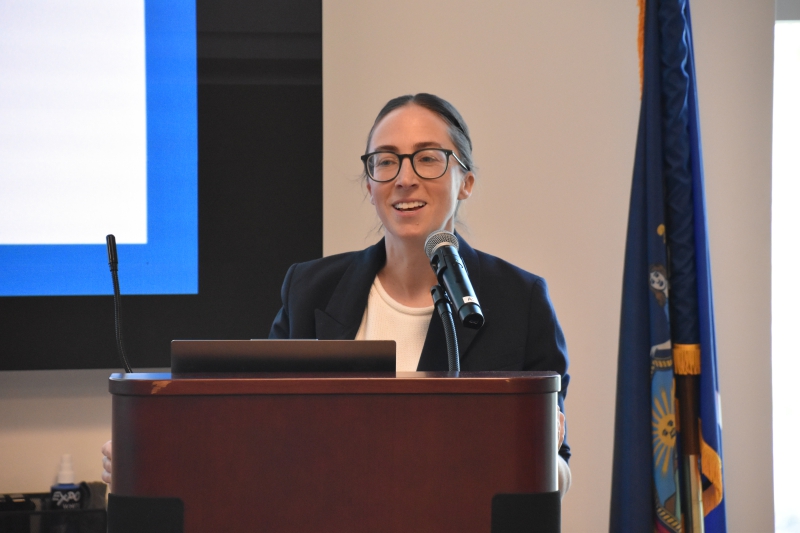
Kasey Meehan, Freedom to Read Program Director at PEN America, spoke about how her organization, which protects free expression in the United States and abroad, has seen an increase in book bans since 2021, including in New York. “The book ban movement escalated when laws started being signed and is something that unfortunately will take even longer to undo because now it’s codified,” Meehan said. “It’s a hard thing for a school district to ignore if your state rep is going to show up and tell you, you have to remove 120 books.”
Many of the fictional books being challenged feature characters of color and who identify as LGBTQ. This year also saw a 30% increase in non-fiction titles about art and science being challenged. “This is where censorship has lost its mind because it’s sweeping so broadly that it’s pulling everything … having a nude Greek statue now gets conflated as sexual content,” Meehan said. “Our democracy cannot survive without an informed populace … we cannot be neutral when it comes to censorship.”
Let the Students Do All The Work! Session
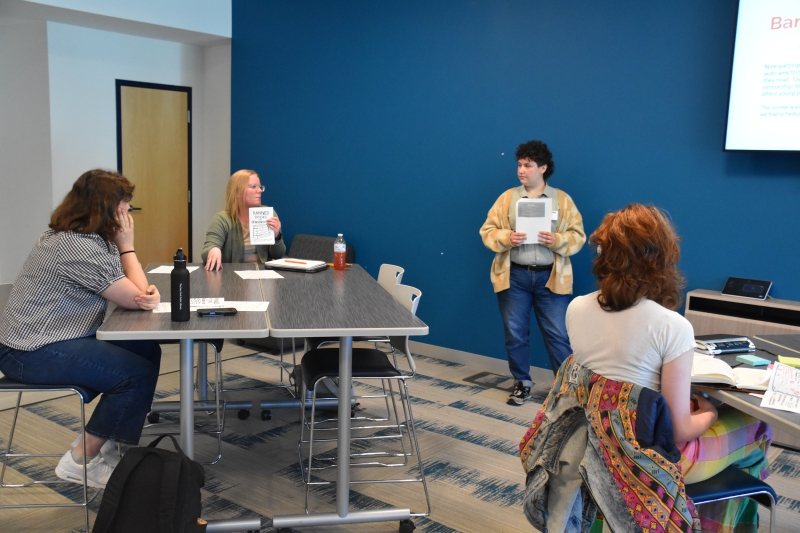
Johanna MacKay, Instructional Design Librarian at Skidmore College’s Scribner Library, hosted this session based on a class she teaches in which censorship is discussed throughout history, including the 1933 Nazi book burnings. “That’s the point in the 1930’s where you start to see it shift 180 to today,” McKay said, adding that librarians now are promoters of freedom of speech.
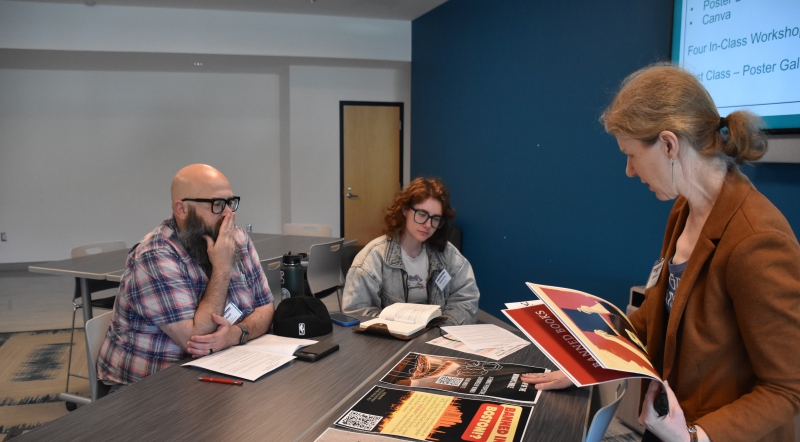
McKay’s students also create posters for Banned Books Week (Oct. 4-10), which include QR codes to a link of their assignments about banned books. She shared the observation that most surprised her students: “Even the students who took my class don’t realize the extent of book banning,” McKay said. “Often they’ll be like, ‘Well, it doesn’t happen today,’ and I’m like ‘Yes it does.’”
Michael Ferrara, a fifth grade teacher at Arlington’s West Road Intermediate School, is considering assigning his students a similar project to McKay’s as he finds they want to learn why certain books are banned. “I like having those challenging books in my classroom library, I like the questions and conversations it promotes,” Ferrara said. “It really helps to build their critical thinking skills and for them to support each other’s critical thinking.”
Young Adult Intellectual Freedom Advocates
Elting Memorial Library’s Teen Programming Coordinator Deborah Engel-Di Mauro and Assistant Program Coordinator Isaac Murphy were inspired by the Brooklyn Public Library’s “Unbanned Initiative” to host a “Banned Book Soiree.” Teenagers and young adults had dinner and discussed 13 titles from the American Library Association’s top list of banned books, which they read in advance. “It actually wound up being too short of a time,” Engel-Di Mauro recalled. “The participants did enjoy it and we had a lot to talk about.”
Participants also made book banning-themed zines, or limited circulation pamphlets of self-published work highlighting stigmatized issues overlooked in mainstream media. Each participant explored different topics, including what censorship is. Session attendees were later invited to make their own zines. “Everyone had a different thing to think and talk about,” Murphy said. “Marginalized groups have always used small publications such as leaflets or pamphlets to get their point across since the technology has been available.”
Laura Garrand, an eighth grade English Language Arts teacher at Wappingers’ Van Wyck Junior High School, likes the idea of using zines as a final assessment on books her students read to engage them in collaborative work and show what they are thinking, as opposed to writing a book report. “When you’re engaged in conversation and you’re listening to other people’s thoughts and ideas, it might trigger something you weren’t thinking or that you initially were uncomfortable saying,” Garrand said. “The symposium has been engaging and enlightening.”
As the conference closed, one thing was clear, libraries must continue to be places of learning for the curious, not become battlegrounds for censorship.