
 Students who learn self-determination skills have a greater opportunity for success once they graduate, according to numerous studies. This is why teaching students these skills is a key component at Salt Point Center and Dutchess BOCES.
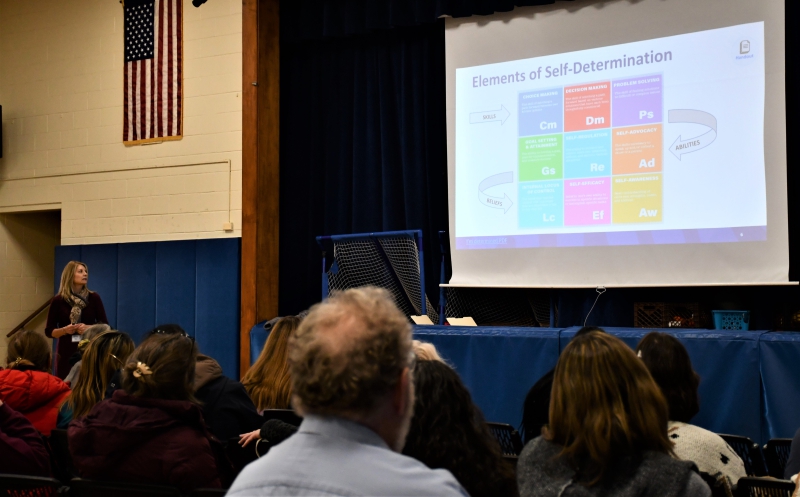
There are nine key elements of self-determination, or knowing you have control of how you act: choice making, decision making, problem solving, goal setting and attainment, self-regulation, self-advocacy, internal locus of control, self-efficacy and Self-Awareness. Regional Partnership Center Transition Specialist Lindy Krafft shared some tips on how to foster self-determination in students with SPC staff as part of the monthly staff meeting.
“When students possess these skills, they are more apt to graduate high school and find productive work,” said Krafft, who showed a diagram of the skills on the screen and also provided it as a handout.
According to a variety of study results Krafft shared, students who are self-determined are:
- More than twice as likely as peers to be employed one year after graduation.
- More likely to be living independently.
- More likely to be making more money per hour and employed in a job with benefits.
She encouraged teachers to have a poster containing the nine self-determination elements in the classroom, refer to it, incorporate the elements into lessons and identify them to students while doing so. “How do we talk about them and identify the skills for our students? Do we talk about choice when they are picking out a book to read? If they have to go to the bathroom, are we talking about self-advocacy so that they can understand and recognize the skills?”
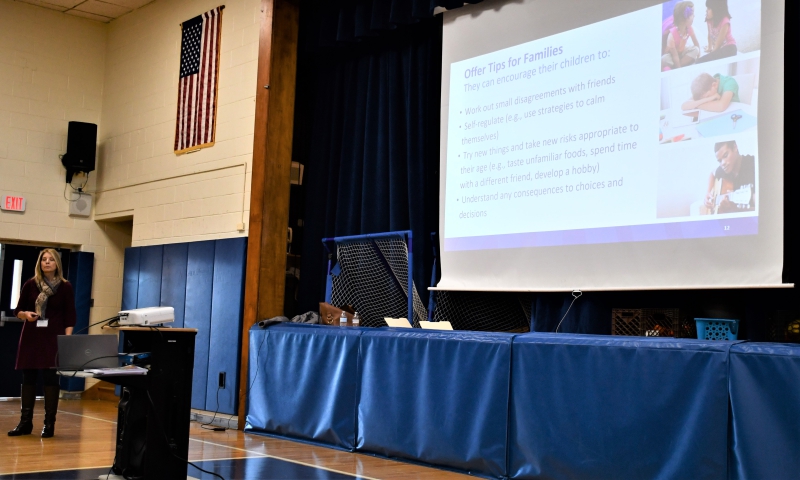
Promoting and teaching self-determination isn’t just something that happens in the classroom. Krafft suggested that teachers to provide parents with ways they can help their children by encouraging them to:
- Work out small disagreements with friends
- Self-regulate using strategies to calm themselves
- Try new things and take new, age-appropriate risks such as trying new foods, developing a hobby, spending time with a new friend
- Understand consequences to choices and decisions
 A handout was also provided on this topic.
She also talked about paying attention to student interests and finding ways to link academics to real life. For example, she said if a student indicates they like cooking or want to become a chef, she suggested connecting math and fractions with how chefs need that knowledge for cooking.
“This training on self-determination is especially meaningful because it directly connects to the daily work of our staff — helping students recognize their strengths, express their needs, and build the independence necessary for success beyond school. By investing in our own growth, we ensure we are empowering students to grow as well,” Principal Melissa Murphy said.