
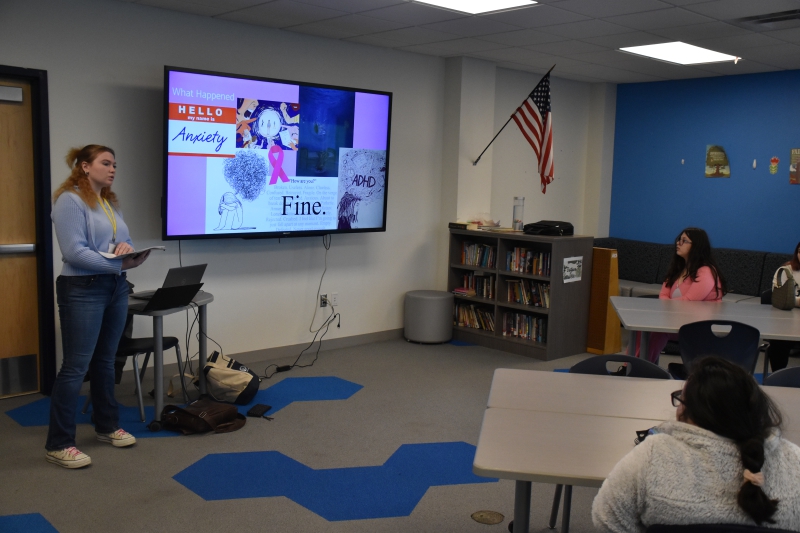
 Presenters from the Mid-Hudson chapter of the National Alliance on Mental Illness (NAMI) visited the Resilience Academy (RA) on May 13 to share about ways to cope with and recognize the warning signs of depression and other mental health conditions during National Mental Health Awareness Month.
The talk was titled “Ending the Silence,” because NAMI Program Coordinator and Lead Presenter Rob Brown said the organization encourages people to talk about their mental health, rather than keep it quiet. Brown knows from experience – although he accomplished much in his professional life, he could not enjoy any of it due to longstanding anxiety. He eventually sought help when he was in his 30’s, but recommended students do so sooner because a condition is easier and cheaper to treat when they are young. “Now, because I worked on my anxiety, I can wake up in the morning and be happy and proud of myself and the things I’ve done,” Brown said.
NAMI Young Adult Presenter Makayla Powder, who is studying sociology at SUNY New Paltz, shared about being diagnosed with major depressive and generalized anxiety disorders following COVID and committing self-harm before seeking help. “Mental health conditions aren’t anyone’s fault or something to be ashamed of,” Powder said. “The stigma surrounding mental health is what caused me to keep my feelings buried, now in my junior year, I’ve accepted that my brain works differently.”
Powder has since found a stellar therapist who provides her with positive coping mechanisms and keeps her mind at bay by listening to music, making blankets, spending time with friends and communicating with her girlfriend when things get stressful. “My biggest accomplishment of all is still being here today … recovery is possible for anyone,” Powder said. “I hope that by sharing my story, someone feels a little less alone and sees that things truly can get better.”
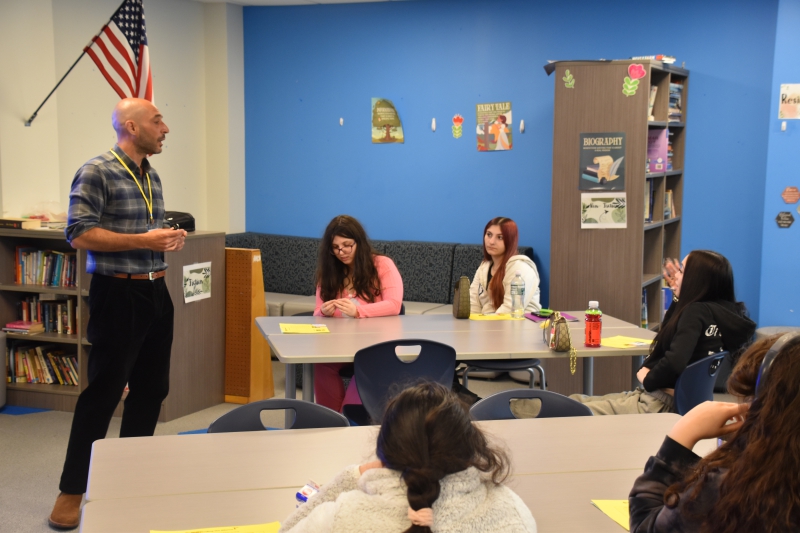 Exercising, eating healthy and getting plenty of sleep are important for maintaining good mental health, and Brown encouraged students to know the warning signs when someone is dealing with a mental health condition. These include being sad or withdrawn for two weeks, taking severe risks and trying to harm themselves or making plans to do so. All warning signs should be taken seriously, and Brown recommends telling a trusted adult, calling 988, the Suicide & Crisis Lifeline, or going to an emergency room if someone is considering committing suicide. “There’s hope and treatment is available for all mental health conditions,” Brown said. “The earlier somebody gets treatment, the better.”
Brown handed students a sheet of trusted adults at RA they can speak with about mental health concerns, including Principal Kiesha Tillman and the school’s social workers.
“Please get to know at least one person on this list because they’re going to be your best resource to ask questions about mental health,” Brown said. “You have the power to end the silence if you are comfortable talking about it.”
Sophomore Emma Waage appreciated how the presenters enhanced the talk by sharing signs of mental health conditions to be aware of and about their own mental health struggles.
“Knowing that they’ve been through a lot, it’s nice to know that they’ve made it through and now they’re able to help other people,” Waage said. “I feel like it’s more immersive.”
If you or someone you know is in need of help, text “Friend” to NAMI’s Teen & Young Adult Help Line at 62640 or text “NAMI” to its 24/7 Crisis Text Line at 741741.